
Why Our Jaws Are Getting Smaller and Teeth No Longer Fit
If your bottom front teeth have slowly crowded together over the years, if there was never enough room for your wisdom teeth, or if you wake up tired with sore jaw muscles and front teeth that look shorter than they used to, those problems are not unrelated. They usually share a single cause. And the cause is not your teeth.
It is the size of the jaw your teeth had to fit into.
In my world of dental health care, I can answer this to a significant degree. Here is what is happening, why it has become so common, and what can actually be done about it at every stage of life.
Your teeth are not too big. Your jaw is too small.
Our heads are getting smaller. That is right. Our cranium, or as it is often called, our skull, is not as large as it once was.
The telling sign most of us can recognize is that we no longer have room for our wisdom teeth. Did we suddenly get too many teeth? Are they bigger than they used to be? The answer is no. We no longer have the skeletal support or the skeletal arch development to allow proper eruption for 32 teeth.
Not that many years ago we had the facial growth and development to house 32 teeth and to have them come in straight. Early man had much better dental alignment and function than modern man. So the question worth asking is why our heads are getting smaller.
How the upper jaw is supposed to grow
A bit of background first.
Our cranium is roughly half its adult size at birth, and the head makes up 20 to 25 percent of a newborn’s total length. It is obvious that as adults we are no longer proportioned that way. Ask any mother who had a natural delivery and she will confirm the large head size.
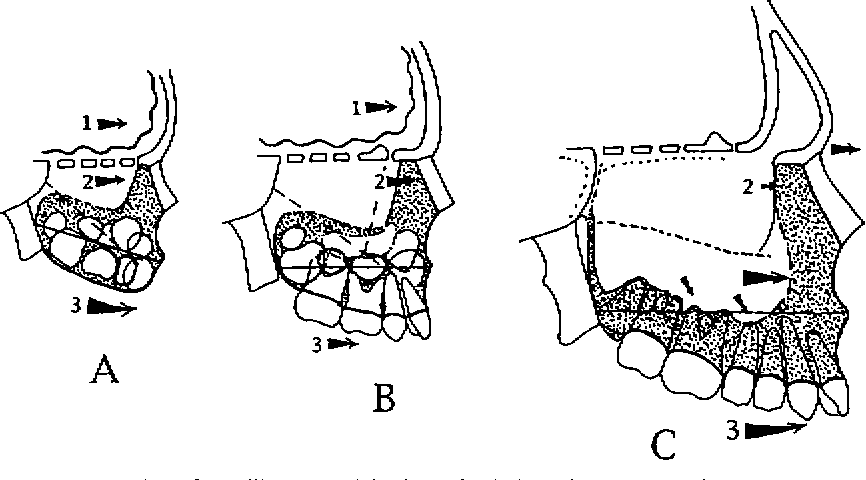
The cranium keeps growing until around age 13. The upper arch, known as the nasomaxillary complex, is part of the cranium, and it grows only until about age 8. That short window matters enormously.
We cannot voluntarily move any of the bones of the cranium. Movement happens in the neck. But the sutures between those bones do not fuse, and they stay mobile. Your upper jaw sits on, in front of, and underneath many of the cranial bones. When it grows in the early childhood years, it grows predictably, and the maxillary bone is displaced forward and down.
If it grows properly, the health of the human being is greatly enhanced. If it does not grow as it was created to, issues arise, and both children and adults are at risk of being unhealthy.
There is a well-established principle behind this called Wolff’s law: bone grows and remodels according to the loads placed on it. Your upper jaw, the maxilla, develops through proper diet and chewing up to about age 8. Take away the load and you take away some of the growth.
Why the lower jaw takes the blame for an upper jaw problem
When the upper arch is underdeveloped, significant changes show up in the lower arch, the mandible. The lower jaw keeps growing until 19 or 20 years of age. It fits into the maxillary arch, and its growth is dictated by the growth of the upper.
The clearest early sign of trouble is crowding of the lower front teeth. That signifies a tight occlusal relationship, or simply a tight bite.
If the mandible is restricted by an underdeveloped upper jaw, it keeps growing, but instead of coming forward it grows up and back. That is when symptoms appear: malocclusion, bite problems, jaw joint symptoms, airway issues, and broader health concerns. The lower jaw gets jammed up and trapped inside the small upper.
The old dentist’s tale that lower crowding is caused by wisdom teeth erupting does not hold up. Systematic reviews of the research have found no clear connection between lower wisdom teeth and late crowding of the lower front teeth. The crowding is caused by the lower jaw growing forward into an upper jaw that was never developed to receive it. The lower teeth fit in where they can, and they get squeezed.
The problem sits in the upper jaw. It shows up in the lower.
What changed: our diet and our breathing
Put simply, our diet and our breathing changed.
We have become accustomed to a very soft diet. Early man had to eat what he hunted and gathered. A typical Minnesota diet in the 1800s and before was heavy on game and root vegetables, and most fruits and vegetables were eaten long before winter was over. I joke with my patients that intermittent fasting meant dad was a poor shot. No dinner tonight, I missed the rabbit.
Two significant changes happened in the late 1920s and early 1930s. First, commercial baby food was introduced, and babies stopped chewing their meals. Second, refrigeration reached the public and we could preserve food. Before those two changes we ate what was for dinner. The options were limited, and the diet was tougher and coarser. The industrial revolution was also well underway, and the air we breathe changed with it.
This is not just a dental hunch. Researchers comparing human skulls from before and after the shift to farming found changes in skull shape and in the size of the chewing muscles that line up with a softer, easier-to-chew diet, alongside more crowding and more malocclusion (PNAS, 2017, pnas.org/doi/10.1073/pnas.1702586114). A separate study of molar wear patterns spanning the Industrial Revolution found that the way we chew changed measurably as food became more processed (PLOS One, 2021, ncbi.nlm.nih.gov/pmc/articles/PMC8673603). Animal studies point the same way: pigs raised on nutritionally identical soft and hard diets ended up with different faces, and the soft-diet group developed narrower midfaces and serious bite problems.
In hunter-gatherer skeletal remains, poor bites are rare. In modern industrialized populations they are close to normal. That reversal happened far too quickly to be explained by genetics alone.
Three things we need for life
As humans we need three things: eating and drinking, breathing, and sleep.
If the maxillary arch has not grown and developed properly, we do not breathe well and we do not sleep well. We are unhealthy in our beds. We wake up tired and irritable.
Blood oxygen saturation, or SpO2, should generally sit at 96 percent or above. When we evaluate someone with an underdeveloped maxillary arch, they are at real risk for breathing concerns. Worth noting for anyone reading this with a home pulse oximeter: those readings are useful information, not a diagnosis. A proper sleep evaluation is a different thing entirely.
Signs to look for at every age
In children
Remember that the airway sits in the upper jaw. When it is underdeveloped, watch for breathing problems, grinding, and malocclusion.
Here is something most parents do not know: there should be large spaces between baby teeth, because adult teeth are much larger than primary teeth. We want a picket fence look, not a tight row. A perfectly tidy set of baby teeth with no gaps is often the first warning sign.

Grinding, snoring, and visible chest effort while breathing during sleep are significant signs of childhood apnea. Other symptoms include developmental delay, nightmares, headaches, obesity, bed wetting, poor concentration, night terrors, restless sleep, a chronic runny nose, and frequent upper airway infections.
To put the scale in perspective, habitual snoring affects roughly 7 to 8 percent of children, and obstructive sleep apnea somewhere between 1 and 4 percent (European Respiratory Journal, 2016, publications.ersnet.org/content/erj/47/1/69). There is also a growing body of research linking disordered breathing during sleep in children with daytime hyperactivity, poor concentration, and attention problems. Many of our restless children are restless because of how they are breathing at night. The encouraging part is that these symptoms often improve substantially once the underlying breathing problem is addressed.
In adolescents
Malocclusion, flat faces, asymmetrical bone structure, grinding, sleep disturbances, irritability, and lack of focus. This is also when temporomandibular joint dysfunction begins, and headaches are common.
A well balanced face will serve a young person their entire life. Self esteem in adolescence is a real thing, and it is worth taking seriously.
In adults
Advanced grinding, known as bruxism. Snoring. Airway issues. Malocclusion. Crowded lower teeth. Deep bites. Impacted wisdom teeth. Temporomandibular joint dysfunction. Broken teeth, plus decay and gum disease that trace back to the bad bite. Tooth loss. Muscle imbalance, with neck and shoulder tension and sore chewing muscles.
The pattern is consistent. The maxilla grows to its limits, and then the mandible fits in where it can. Once the two jaws lock together, three things follow. The lower jaw is held back, which means the tongue is held back too. The back end of the mandible is jammed up and back inside the joint. And the muscles start trying to fix the problem on their own. The mandible can move in every direction except backwards, so it moves around, and the teeth take the damage. Often significant damage. We call that attrition.
What grinding is actually telling you
The most common thing I see in practically everyone is wear on the chewing surfaces.
We grind in an elliptical motion, like a teardrop swinging on a pendulum. That motion brings the mandible forward, and the front teeth take the brunt of it. They get worn down, chipped, and roughened.
Normal wear is small. Published estimates put physiologic enamel loss at roughly 15 to 29 microns per year depending on the tooth, which adds up to about one millimeter of loss on the upper front teeth across sixty years of chewing. Plenty of people have lost considerably more than that by age 18. Look in the mirror and you can often see it.
So why do we grind? Because grinding protrudes the mandible. In doing so it brings the chin forward, which brings the tongue forward, which opens the airway and helps align the jaw joints. It is a bodily response to an airway or a joint problem, not a bad habit.
This is where I differ from the conventional explanation, and it is worth saying plainly that the research here describes bruxism as multifactorial, with stress and anxiety recognized among the contributing factors and much of the mechanism centrally driven in the brain rather than in the mouth. My clinical experience is that the airway and the joint come first and stress makes the grinding worse rather than starting it. Either way, treating the grinding without looking at the airway and the bite treats a symptom.
Alongside the wear, you often see gum recession and notching at the gum line. My view is that grinding forces drive far more of this than brushing does, which runs against the usual advice to brush more gently. The honest picture from the literature is that these cervical notches have several possible causes acting together, including acid erosion, brushing abrasion, and bite forces, and that separating them in any one patient is difficult.
Midface deficiency and the modern face
We no longer have pronounced cheekbones and large noses.
People today want small noses and big lips. But noses are for breathing, and lips that look flat and thin are usually a sign of less bone underneath supporting them. We diagnose this as midface deficient. The face you see in the mirror is largely a record of how well the bones underneath it were allowed to grow.
What we can do about it
Start with diet and chewing
The first thing to change is diet.
Baby led weaning is making real inroads, and it matters. In my practice I encourage families to nurse, where that is possible, until the first molars erupt at around one year, as other mammals do, and to introduce real food rather than mush. Current national infant feeding guidance sets the starting point for solids earlier than that, so this is a conversation to have with your pediatrician rather than a decision to make from a blog post.
On safety, be smart about it. Bite size matters a great deal, and so does texture, and some foods remain genuine choking hazards for young children no matter how they are cut. Follow current pediatric guidance on which foods to avoid and at what age.
The broader point stands regardless. Babies have been eating what was for dinner for a very long time. Only very recently have we stopped chewing. And we need to chew well right through the end of upper jaw growth.
Lip seal, nasal breathing and tongue posture
Lip seal, nasal breathing, and proper tongue posture are extremely important.
If the upper jaw is too small there is simply no room for the tongue, and what follows is airway problems, tongue thrusting, mouth breathing, and sometimes speech difficulty. These are not separate issues to be treated separately. They are one problem showing up in several places.
When intervention is needed
In both developing and developed individuals, intervention is often needed.
Orthodontics means straight teeth. Orthopedics means straight bones. Straight bones are more important than straight teeth, and unsurprisingly, when the orthopedics is right, the orthodontics tends to follow.
With advances in paleontology, human epigenetics, and three dimensional radiographs, we can now diagnose skeletal deficiencies and begin the work of correcting maxillary growth and development. We start with a better diet. Where natural growth has already been missed, we can work to stimulate growth and address the problems before they get too serious.
We first diagnose the position of the maxilla on the cranium, then identify the proper stress-free position of the lower jaw. That is a neuromuscular balance, a tension-free posture of the strong chewing muscles. Once we have that position, the upper jaw can be addressed non surgically with functional jaw orthopedic appliances.
Braces alone will not change the size of a jaw. Traditional orthodontic treatment now often promotes broadening or expanding the arches, but the face grows forward, not outward in width. The width follows naturally once you develop the maxilla forward. And if the maxilla is never developed to its genetic potential, the mandible will not advance properly through growth either, so the problem simply continues.
A small group of care givers are addressing these concerns. We have been fighting upstream for years, but the tide is turning and this is becoming more mainstream. There is still a long way to go.
What to expect at your next visit
I have based my career on helping people be healthy. We care for teeth and gums, of course. But we pay particular attention to growth and development, because that is where the life improving work is.
My hope is that when you see your care giver, they are evaluating more than whether you need a filling, a crown, or an implant. The alignment of every component of the bite deserves to be looked at. Put the bones in the right position and the muscles stop damaging the teeth, which leaves you at lower risk for most general dental needs in the first place.
I tell my patients that if your teeth wear out, I cannot put the lost tooth surface back. What we can do is stop the process. And if corrective measures start early enough, it can be prevented altogether.
Contact Us Today to Schedule!
Call our office at 952-924-9198 or use our contact form to set up an appointment.
Contact Us Today to Schedule!
Call our office at 952-924-9198 or click the button below to use our handy contact form to set up an appointment.